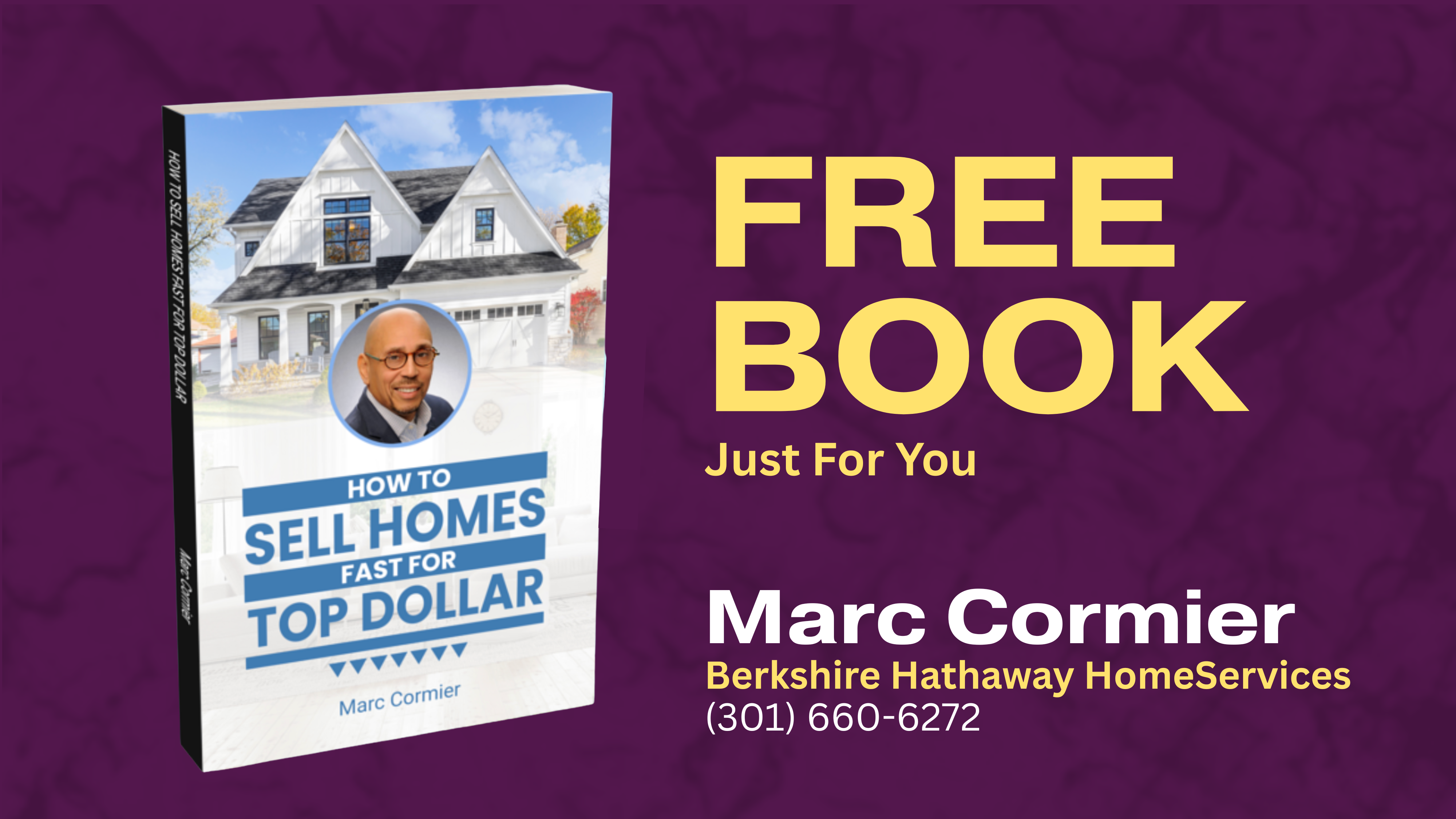
Free Digital Book
How to Get More Money When Selling Your Home
A practical guide by Marc Cormier on preparing, pricing, and selling your home for the best possible result. Learn what most sellers miss and how to maximize your net proceeds.
Why It Matters
Why Most Homeowners Leave Money on the Table
If you have lived in your home for 20, 30, or 40 years, you probably have a lot of equity built up. But the difference between what your home could sell for and what you actually walk away with depends on decisions you make before listing.
Some homeowners over-improve and spend $30,000 on renovations that only add $10,000 to the sale price. Others do nothing and lose buyers who could have paid more for a home that showed better. Both leave money on the table.
The real question isnt "Should I renovate or sell as-is?" Its "What preparation strategy is most likely to produce the best net result for my specific home?"
Thats the question this book answers.
Key Questions Answered
Should I Make Repairs Before Selling?
Not automatically. Some repairs increase the sale price. Others are money you will never get back. The right answer depends on the propertys condition, the local market, the likely buyer, and the cost of the repair versus the expected return.
Repairs That Usually Produce a Return
- Deep cleaning ($200-$600)
- Interior painting, neutral colors ($2,000-$6,000)
- Landscaping cleanup ($500-$1,500)
- Fixing obvious defects (leaky faucets, cracked caulk, burnt-out bulbs)
- Decluttering and junk removal ($150-$800)
Repairs That Rarely Pay for Themselves
- Full kitchen remodel ($14,588-$41,550)
- Full bathroom remodel ($12,000-$35,000)
- New flooring throughout ($5,000-$15,000)
- Major system replacements (new roof, new HVAC)
The goal isnt to make the house perfect. The goal is to determine which preparation will likely produce a worthwhile return on investment.
Home Improvements
Which Home Improvements Are Worth the Money?
The best return comes from improvements that affect buyer perception in the first 90 seconds.
Curb Appeal
Buyers form an opinion before they walk through the door. A clean yard, fresh mulch, and a painted front door signal a cared-for home.
Kitchens and Bathrooms
These rooms matter most to buyers. Painted cabinets, updated hardware, and modern light fixtures can make a dated kitchen feel fresh without a full remodel.
Paint and Flooring
Neutral paint and clean floors are the cheapest ways to make a home feel updated. Bold colors and worn carpet are the fastest ways to lose a buyers interest.
Light and Space
Clean windows, working light fixtures, and removing heavy drapes makes rooms feel bigger and brighter. Buyers pay more for homes that feel open.
As-Is Selling
Should I Sell My House As-Is?
Sometimes. Selling as-is makes sense when:
The property needs more work than you can afford or manage
You are out of state and cannot supervise renovations
You want certainty and speed
The cost of repairs exceeds the expected increase in sale price
Selling as-is doesnt mean selling without preparation. Even an as-is sale benefits from cleaning, decluttering, and removing obvious hazards.
Home Staging
Does Staging Really Help a House Sell?
Yes, when done correctly. Research from the National Association of REALTORS shows that 83% of buyers agents said staging makes it easier for buyers to visualize a property as their future home. 29% of agents reported a 1%-10% increase in the dollar value offered. 49% of sellers agents reported reduced time on market.
Staging isnt decorating. Its marketing. The goal is to help buyers see themselves living in the house, not to showcase your personal style.
Belongings
What Should I Do With All My Belongings Before Selling?
After 20, 30, or 40 years, most homes have accumulated far more than the next buyer wants to see. Sorting through everything feels overwhelming, but it is one of the most important steps.
Things going to your next home
Things going to children or relatives
Things someone else can use
Things that need to go
Start early. Do not wait until the house is listed to begin sorting. Professional organizers and estate sale companies can help if the volume is too much to handle alone.
Preparation
How Do I Prepare a Home Ive Lived In for Decades?
The way you comfortably live in a house and the way we market that house are two different things. After decades in the same home, it is normal to have large furniture that dominates rooms, collections and personal items covering surfaces, full bookshelves and closets, personal photographs on every wall, and rooms that evolved as your family changed.
A buyer sees everything for the first time. Professional preparation helps determine what stays, what goes, and what the home looks like when it is ready for someone new.
Pricing
How Should I Price My House?
Pricing is the most important decision you will make. Price too high and the home sits on the market, accumulating carrying costs and losing buyer interest. Price too low and you leave money on the table.
Recent comparable sales in your neighborhood
Your homes condition relative to the competition
Current market supply and demand
Buyer expectations at your price point
A professional market analysis gives you the data to price strategically, not emotionally.
Common Mistakes
What Mistakes Cause Homeowners to Leave Money on the Table?
1. Over-improving
Spending more on repairs than the market will return.
2. Under-preparing
Listing a home that shows poorly.
3. Pricing emotionally
Basing the price on what you paid or what you need, not what the market supports.
4. Ignoring curb appeal
Buyers decide before they walk through the door.
5. Waiting too long
Every month of carrying costs eats into your equity.
6. Not getting professional guidance
A walkthrough with an experienced agent costs nothing and prevents expensive mistakes.
Selling Strategy
Should I Move Out Before Selling?
Not necessarily. Some sellers sell their home while living in it. Others move out first. Both work, but each has trade-offs.
Selling While Occupied
- No carrying costs on a second home
- No vacancy risk
- Daily maintenance and showings around your schedule
- Keeping the home staged while living in it
Selling After Moving Out
- Home is always ready for showings
- Easier to stage, no living around the sale
- Double housing costs
- Vacancy risk and utilities on empty home
The right choice depends on your timeline, your financial situation, and whether you have somewhere to go.
First Steps
What Should I Do First if I Am Thinking About Downsizing?
Start with the numbers:
What is your home worth?
Get a professional market analysis.
What does it cost to stay?
Add up mortgage, taxes, insurance, utilities, maintenance, and repairs.
What would you net after selling?
Subtract selling costs from the expected sale price.
Where would you go?
Research communities, neighborhoods, and housing options.
You do not have to decide anything today. But understanding the numbers puts you in a stronger position whenever you are ready.
Return on Investment
How Do I Know Whether Spending Money Will Produce a Good Return?
Ask three questions:
Will this improvement affect the buyers offer?
Buyers notice kitchens, bathrooms, curb appeal, and obvious defects. They do not usually care about upgraded light switches.
Does the cost exceed the expected increase in sale price?
If a $10,000 update only increases the price by $5,000, price the property accordingly instead.
Can the buyer do this work cheaper than I can?
Professional contractors and flippers often have lower costs. Let them handle major renovations if the numbers make more sense.
Free Digital Book
Get a Free Digital Copy of "More Money"
This page covers the key concepts. Marc Cormiers book "More Money" goes deeper with practical strategies for preparing, pricing, and selling your home for the best possible result.
Whats in the Book
-
How to determine which improvements produce a real return
-
Pricing strategies that maximize net proceeds
-
How to prepare a home you have lived in for decades
-
Common mistakes that cost sellers thousands
-
How to compare your selling options (list, cash, as-is)
-
Maryland-specific market insights
Download Your Free Copy
Enter your details below and receive the complete digital book instantly.
Sorry, we couldn't reach our system. Your details were not sent. Please try again in a moment.
Thank You!
Your free copy of "More Money" is on its way. Check your email for the download link.
If you do not see the email within a few minutes, check your spam folder.
Something went wrong. Please try again or call Marc directly at (301) 660-6272.
Your information is secure. We will never share or sell your data.
Not Ready to Sell? Thats Fine.
If you are simply trying to figure out what your house may need, what it could sell for, or whether downsizing makes sense, talk with Marc about your options.
No pressure. No obligation. Just a conversation about what is possible.

About the Author
Marc Cormier
Marc Cormier is a licensed real estate professional with Berkshire Hathaway HomeServices PenFed Realty, based in Montgomery County, Maryland. He has 27 years of experience and has sold close to 1,000 homes, with a focus on helping homeowners prepare, position, and sell their homes for the best possible result. He holds the SRES (Seniors Real Estate Specialist) designation.
Marc wrote "More Money" because he saw too many homeowners make expensive mistakes over-improving, under-pricing, or selling without understanding their options. The book is a practical guide for anyone who wants to understand what their home is really worth and how to maximize the sale price.
Explore More
More Downsizing Resources
Downsizing Cost Calculator
Compare costs of staying vs. selling. See the numbers for your Montgomery County home.
Thinking About Downsizing?
Where to start, what to expect, and how to make the decision with confidence.
Cost to Downsize in Montgomery County
Real cost breakdown: repairs, staging, moving, closing costs, and what to expect.
Selling a Larger Home, Buying a Smaller One
The financial and lifestyle transition from a large family home to a smaller space.
Home Preparation Cost Guide
What repairs and improvements actually cost before listing your home for sale.
90-Day Downsizing Checklist
A week-by-week timeline from decision to closing for Montgomery County homeowners.
Best Neighborhoods for Downsizing
Walkable, amenity-rich neighborhoods in Montgomery County ideal for downsizers.
Does Home Staging Help Sell for More?
NAR statistics, staging ROI, and real examples showing the impact of staging.
Ready to Get the Most From Your Home Sale?
Whether you are ready to sell or just exploring your options, Marc offers a free, no-pressure consultation to help you understand your homes value and the best path forward.